

One on One Support
A slower place to meet what is happening in your life
Sometimes you can keep going for a surprisingly long time.
You work, answer messages, care for other people, make decisions, move through changes, and keep finding ways to get through what the day asks of you. Life may even look fairly ordinary from the outside. Meanwhile, something underneath can feel tired, unsettled, disconnected, or increasingly difficult to carry.
Maybe you know exactly what is happening. You are burned out. You’ve lost someone. A relationship has changed. You moved countries. Your identity or sense of direction is shifting. The life you built no longer quite fits. Modern life is overwhelming and there never seems to be enough time.
Or maybe it is harder to name than that. You simply know that something needs your attention. Our sessions create a regular place to slow down and meet whatever is there. You do not need to arrive with a perfectly organized story. We can begin with the life you are actually living and let the work unfold from there.

We begin with what is here
A session might begin with something that happened yesterday, something you have been carrying for twenty years, or simply the feeling that you are exhausted and have no idea what you want to talk about.
We start there.
As we spend time together, different threads often begin to appear. A problem that seemed to be about work may also touch grief, belonging, family, identity, or the way you have learned to move through relationships. Burnout may open questions about the shape of your life. A transition may stir older stories about who you have been expected to become.
There is room for complexity. We can stay curious about what connects these different parts of your life and notice what becomes clearer when there is enough time and attention around them.

The work takes shape between us
My approach is relational, somatic, and grounded in mindful attention.
Much of the work may simply look like two people sitting together and talking. Within that conversation, we can slow down enough to notice what is happening in your body, what you are drawn toward or pulling away from, what feels difficult to say, and what seems to carry energy or meaning.
At other times, the work may naturally move somewhere else. We might sit quietly for a while, use a mindfulness or somatic practice, write, draw, listen to sound, walk outside, or explore something through imagery or movement.
You are always part of deciding what feels useful. Over time, we develop a shared sense of how you work, what helps you feel more connected to yourself, and what kinds of exploration seem to open something meaningful.

Your life exists within a larger landscape
I am interested in the whole ecology around a person.
Our experiences are shaped through relationships, culture, work, family, community, migration, identity, money, expectations, history, place, and the environments where our lives unfold. Sometimes something that has been carried as an individual problem begins to look different when we become curious about those wider conditions.
Many of the people I work with have spent significant parts of their lives feeling between worlds or outside conventional scripts. They may be queer or trans, neurodivergent, immigrants or internationals, living with disability or chronic illness, exploring unconventional relationships, or simply building a life that looks different from what they were told it should look like.
You are welcome to bring all of that with you.
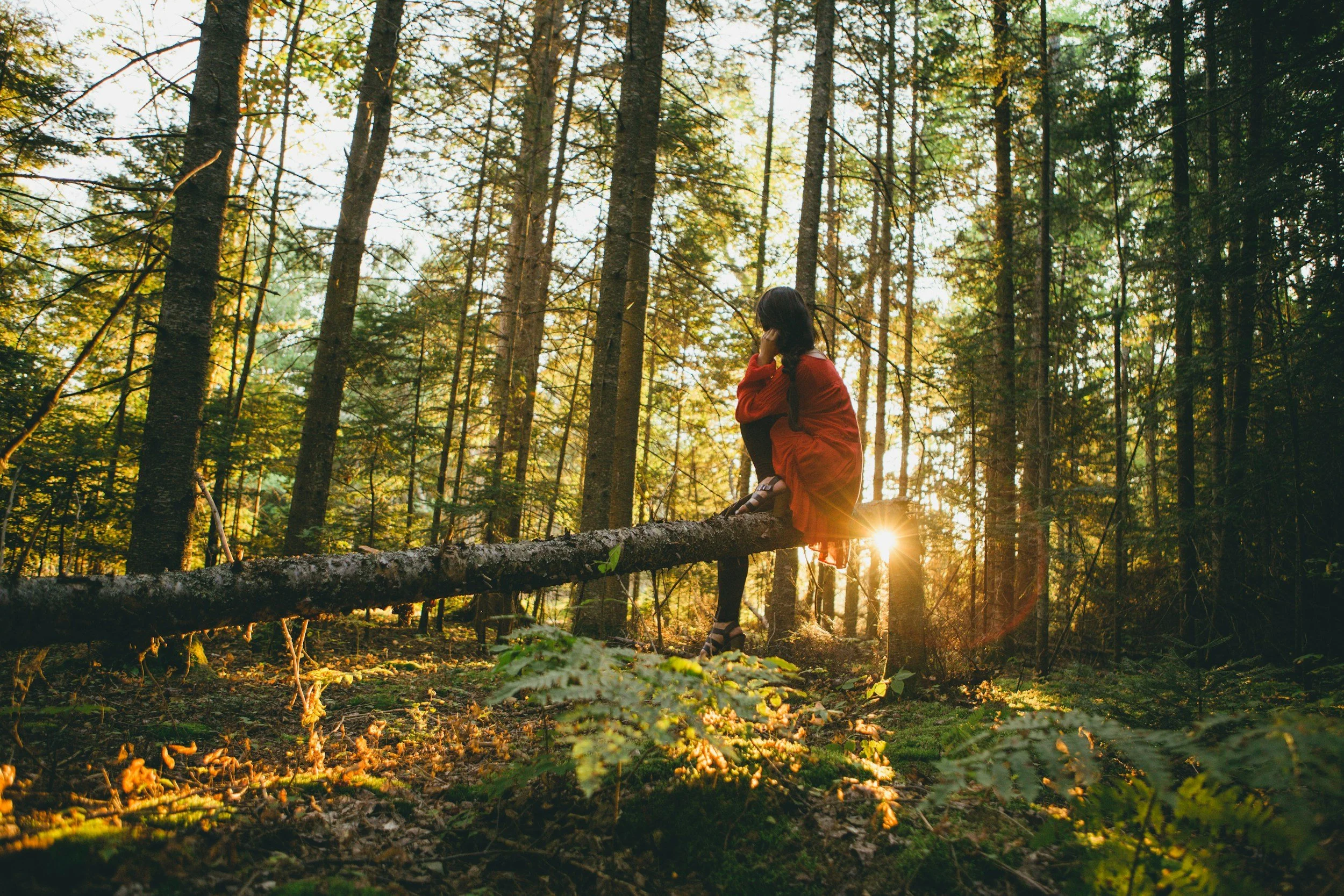
When you are deeply tired
Burnout can make even support feel like one more task.
You may arrive at a session with very little energy for explaining yourself. You may be tired of thinking about what you should change, tired of receiving advice, or tired of turning every difficult experience into another project for self-improvement.
We can work from where your capacity actually is.
Some weeks may hold a lot of conversation and exploration. Others may be quieter. There can be room for grief, exhaustion, uncertainty, and the simple experience of being accompanied while you find your footing again.
The relationship develops over time, so you do not have to begin again every week. I know the landscape. We can pick up the threads together.

An ongoing rhythm
I work primarily through ongoing weekly sessions. The continuity gives us time to know one another, notice patterns as they emerge in real life, and stay connected to whatever is unfolding over time. You can choose between two session lengths.
50-minute sessions 1,200 NOK (€110)
Fifty minutes offers a steady weekly rhythm and works well for people who appreciate a more contained space for conversation, reflection, and ongoing support.
90-minute sessions 1,800 NOK (€165)
Ninety minutes gives us more room to settle in and follow something at a slower pace. It can be especially supportive when transitions between activities take time, when your story carries a lot of context, or when you simply prefer having more breathing room within the session. You do not need to know immediately which length will suit you. We can talk about it during the introductory consultation and adjust over time if your needs change.
When you need a larger container
There are also times when even a 90-minute session feels small compared with what you are carrying.
I offer Full Day Intensives for people who want to set aside an entire day, approximately eight hours, for a more spacious period of support. This may be particularly appealing during deep burnout, grief, major transitions, or when you are travelling from farther away and want to spend concentrated time together before continuing online.
Some people begin our work with an intensive and move into weekly sessions afterward. Others work with me weekly and return for an intensive occasionally when life asks for a larger pause.
Full 8 hour day · 12,500 NOK (€1150)
Where we meet
Sessions are available in person in Oslo, outdoors when that feels supportive, and online.
My office offers a quiet place for conversation, somatic work, reflection, sound, or other practices. Outdoor sessions may involve walking or sitting somewhere in the city, along the river, or in nearby natural areas. Online work allows us to continue the same relational process when distance, travel, energy, or everyday life makes meeting in person less practical. We can choose the setting that feels most supportive for you.
Begin with a conversation
I offer a free 30-minute introductory consultation so we can meet, talk about what is bringing you in, and get a sense of whether working together feels right.
There is no expectation that you arrive knowing exactly what you need or to decide anything in the moment.
FAQ
-
I use counselling and coaching as broad ways of describing the reflective, relational work we may do together. My approach is informed by more than a decade of experience as a counsellor, along with training in somatic, mindfulness-based, trauma-informed, and relational approaches.
This work is not based around clinical diagnosis, psychiatric assessment, or treatment of a diagnosed mental health condition. We may explore emotions, patterns, relationships, identity, life transitions, burnout, meaning, or whatever else is important to you, but the focus is on understanding your experience and supporting the changes you want to make.
-
Weekly work creates the kind of relational container that supports the way I practice. Having a regular rhythm gives us time to build trust, notice patterns as they emerge in everyday life, and stay close to what is unfolding rather than repeatedly starting over.
It also allows the work to deepen gradually. Some things become clear quickly, while others reveal themselves over time through repetition, relationship, and the small moments that are easy to miss when contact is more occasional. There is room for self-inquiry, experimentation, reflection, and for new understanding to emerge without needing to force it.
I also see our relationship itself as part of the work. Sessions can become a place to practise new ways of relating: asking for what you need, setting limits, disagreeing, giving me feedback, naming when something does not feel right, trying something unfamiliar, or allowing yourself to be more fully known.
That includes endings. You are always entrusted to know what feels right for you. If you feel the work has reached a natural end, that you want to pause, or that another kind of support would be more useful, I want you to be able to say that openly. Bringing a relationship to a thoughtful close can be part of the work too.
-
That is completely okay.
You do not need to decide in advance how long you will work with me or make a commitment to some indefinite future.
We can begin with weekly sessions and let you experience the work for yourself. As we go, you can notice whether the relationship, pace, and way of working feel supportive. You are welcome to raise questions, ask for changes, pause, or bring the work to a close at any point.
I see that freedom as part of the relationship. You do not need to keep attending simply because you started. The hope is that you stay because the work continues to feel meaningful and useful to you, and make the choice to end or pause when you feel ready.
-
There is a wide range.
Some people work with me for a few months around a particular transition, period of burnout, grief, or relationship change. Others find that the work continues to be meaningful over a year or several years as different layers of their lives unfold.
There is no predetermined course you need to complete.
We can periodically reflect together on how the work feels, what has changed, what still seems alive, and whether continuing in the same way feels useful. You remain free to pause or end whenever you feel ready.
-
Yes.
During periods of intense stress, deep burnout, grief, major transition, or times when life feels particularly difficult to carry, meeting twice weekly can sometimes provide a helpful sense of continuity and support.
We can use that rhythm for as long as it feels useful and return to weekly sessions when things feel steadier. Availability will depend on my schedule, but I am happy to talk about it when more frequent support feels important.
-
The consistency of weekly work matters because the time is held specifically for you.
When we agree on a regular session time, I reserve that part of my week for our work and do not offer it to someone else. That continuity helps create the dependable rhythm that allows the relationship and the work to develop over time.
I ask for at least 24 hours' notice if you need to cancel or reschedule. Appointments changed with less than 24 hours' notice are charged at the full session fee.
The policy also supports the sustainability of my practice. The kind of work I offer depends on being able to show up with enough steadiness, attention, and presence to meet you well. Holding clear boundaries around time and scheduling is part of what allows me to keep that capacity available over the long term.
I understand that life is unpredictable and that illness, emergencies, and difficult weeks happen. The policy is there to support the stability of the container, the time I have set aside for you, and the conditions that help me continue offering this work with care.
-
Usually, no. I work from the belief that you have agency and are the primary authority on your own life. My role is not to make decisions for you, but to help you slow things down, notice what is happening, explore possibilities, and hear your own wisdom more clearly.
Sometimes you may want ideas, information, practices, or a more direct perspective from me. You are always welcome to ask for that.
-
People come to me with many different questions, including relationships, identity, major life changes, burnout, boundaries, communication, neurodivergence, belonging, emotional patterns, values, meaning, and finding a more sustainable way of living.
You do not need to arrive with a perfectly defined goal. We can figure out together what feels most important.
-
My practice is not an emergency or crisis service, and I am not able to provide between-session crisis response or emergency mental health care.
If you are experiencing an immediate mental health crisis, are unable to keep yourself or someone else safe, or need urgent psychiatric or medical support, please contact the emergency or crisis services where you live.
-
Yes—everything you share with me is confidential. I treat your story with care, meaning I won’t share what you say with others, and I offer a safe, respectful space where all parts of you are welcome.
Many people come to me because they’ve felt judged, unseen, or misunderstood elsewhere. You don’t have to censor yourself here. I don’t offer advice from a distance—I meet you where you are, with presence, honesty, and kindness.
That said, I don’t work with people who are in active crisis or experiencing ongoing suicidal thoughts. If you’re ever at risk of harming yourself or someone else, we’ll pause and work together to find the right support. I’ll never abandon you, but I will make sure you get the care you need to stay safe.
-
I have a wide range of personal and professional experience working with a vast array of different intersecting cultural identities and expressions. I have worked with people of all different racial and ethnic backgrounds, religions, ages/generations, socioeconomic statuses, disabilities, neurotypes, sexualities, gender identities, relationship orientations, national origins, and political views. I’m someone who is comfortable holding lots of space for nuance, complexity, and polarity. Everything and everyone is welcome. Nothing is too taboo or off limits and you will not be pathologized.
I have extensive experience working with the following communities/cultural contexts:
-LGBTQIA+
-Polyamorous, non-monogamous, open relationships
-Kink and BDSM, highly taboo and stigmatized sexual identities/desires
-Sex workers
-Neurodivergence
-Chronic illness and disability
-1st and 2nd gen immigrants, third culture kids, expats, internationals
-Multiple intersecting marginalized identities
-
Please tell me. I want our work to be collaborative, and you never need to protect my feelings or continue with a practice, direction, or approach that does not feel useful.
You are welcome to ask for something different, slow down, change the subject, say no to an invitation, or tell me what you need more or less of. Your feedback is what shapes the work.