

Long-Distance Relationship Counselling
Two practitioners. Exploring connection, intimacy, and the possibilities of loving across distance.
Being in a long-distance relationship can be beautiful, challenging, creative, and sometimes incredibly lonely. You may have found someone you love deeply, yet the realities of distance, time zones, work, family, or different places you call home make it difficult to share your lives in the ways you'd like.
Maybe you're exhausted by screens, struggling to feel connected between visits, or finding that misunderstandings become particularly difficult when you can't simply reach for one another. Or maybe you love aspects of living apart and are questioning the assumption that a committed relationship needs to follow a traditional path toward living together.
We believe long-distance relationships deserve to be understood and supported on their own terms.
Alongside my life partner, Kirien, I offer 2:2 couples counselling where we can slow down, explore the complexities of being apart, and discover different ways of experiencing closeness, intimacy, and connection.
We bring our own lived experience of long-distance partnership, along with a shared curiosity about what's possible when we approach online connection differently.
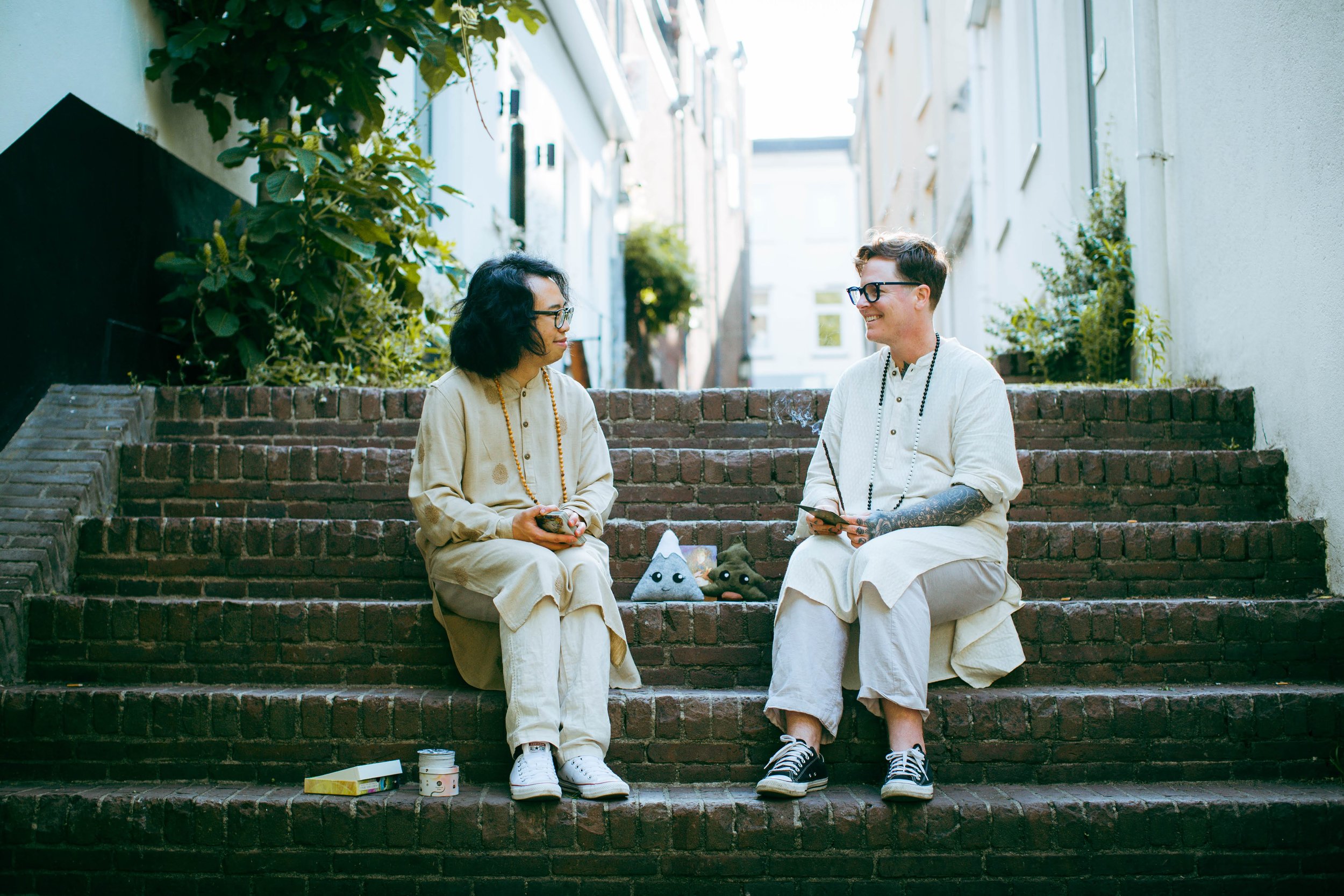
When love stretches across distance…
There are some things about long-distance relationships that can be genuinely difficult. You might miss the ordinary moments of being together. Making breakfast, sharing a quiet evening, reaching for one another after a difficult day, or simply knowing that someone you love is nearby.
Sometimes the longing is especially painful after a visit, when the warmth of being together gives way to another goodbye. Other times, the challenges are less obvious.
Perhaps one of you has a busy social life while the other feels increasingly lonely. One partner may need frequent communication to feel connected, while the other finds constant messaging overwhelming. Or perhaps you have very different expectations about how much time you should spend online together.
Even small misunderstandings can become difficult when you don't share the everyday experiences that might otherwise help you reconnect. Sometimes the pressure to make every conversation meaningful or every visit wonderful becomes exhausting in itself.
There's room to acknowledge how hard this can be, without assuming that the distance is something that needs to be eliminated. We can become curious about what your relationship actually needs, and what forms of closeness might be possible within the circumstances of your lives.

You might be coming because…
You're finding it difficult to feel emotionally or physically connected while living apart.
Video calls and messaging have begun to feel exhausting, repetitive, or unsatisfying.
You miss everyday intimacy, shared routines, physical affection, or simply being present with one another.
Differences in time zones, schedules, or availability are creating tension.
One of you wants more contact while the other needs more space or independence.
Misunderstandings escalate through text or video calls, and you struggle to reconnect afterward.
The time between visits feels lonely, uncertain, or difficult to sustain.
You're navigating jealousy, insecurity, trust, or different expectations around exclusivity and commitment.
You're questioning whether, when, or where you might eventually live together.
One partner feels pressure to relocate or make sacrifices that the other may not fully understand.
You're building a relationship across countries, cultures, languages, or different stages of life.
You want to explore creative or non-traditional ways of organizing your relationship.
You appreciate aspects of living separately and want to build a fulfilling relationship without necessarily sharing a home.
You're curious about deepening your online intimacy and discovering new ways of feeling connected.
You don't need to arrive with a particular problem. Sometimes it's enough to recognize that your relationship could benefit from more space, attention, and opportunities to discover what's possible

Online intimacy can be something different…
Let's acknowledge something many long-distance couples experience: being online can really suck sometimes. Screens can feel flat and tiring. Conversations become predictable. We miss touch, shared physical space, and all the subtle ways we connect through simply being together.
It's understandable to feel frustrated by the limitations of technology. Yet we've become increasingly curious about the possibilities for intimacy that are available precisely because we're meeting from different places.
What if being online could invite us into a different kind of closeness?
What might become possible if we stopped trying to reproduce an in-person experience and became curious about the unique qualities of connecting across distance? Perhaps you begin noticing the sound of rain outside your partner's window, or the different quality of light in the room where they're sitting.
Maybe you invite one another into the ordinary places where you spend your days, sharing the sounds, textures, and rhythms of your different environments. You might discover something new about how your partner experiences their world, or find moments of surprising intimacy in simply sitting quietly together, each in your own space.
There are so many possibilities for connection beyond constantly talking, explaining, or trying to make the most of every minute together. We can explore these possibilities at a pace that feels comfortable, discovering what resonates with the relationship you're creating.

Eco-Relational Presencing: a different way of connecting online
One of the approaches we bring into this work is Eco-Relational Presencing, a practice developed by Kirien that draws together mindfulness meditation, Authentic Relating, and nature and forest therapy.
At its heart, the practice invites us to become more deeply aware of ourselves, one another, and the living environments we're part of, even when we're meeting through a screen. Rather than focusing exclusively on conversation, we become curious about the whole experience of being together.
What does it feel like to be you, where you are right now?
What are you noticing in your body and surroundings?
What happens when you share those experiences with someone you love, and allow yourself to become curious about theirs?
We might experiment with simple invitations, such as noticing the sounds around us, describing something meaningful in our environment, sharing a quiet moment together, or exploring what it feels like to be seen and heard by another person. There is something especially interesting about this in long-distance relationships.
You may be living in different cities, countries, climates, or time zones, yet you're still participating in the same larger living world. Our surroundings, bodies, histories, and relationships are always part of how we experience one another. Eco-Relational Presencing invites us to bring more of that experience into our connection.
It can also create opportunities for playfulness, creativity, and discovery, allowing us to relate in ways that might feel unfamiliar at first. You don't need experience with meditation, nature connection, or any particular spiritual practice to participate. Everything is offered as an invitation, with room to experiment, adapt, and find what feels meaningful to you.
Learn more about Kirien's Eco-Relational Presencing approach

When conflict happens through a screen…
Conflict can feel particularly difficult when we're apart. A text message gets misunderstood. Someone becomes quiet during a video call. One partner wants to resolve something immediately, while the other feels overwhelmed and needs space. Without the familiar experience of physical closeness, it can be harder to recognize an attempt to reconnect or to feel reassured that the relationship is okay.
Sometimes we keep talking long after we've stopped being able to hear one another. Our approach offers opportunities to experiment with different ways of meeting these moments. We might invite you to pause a difficult conversation and notice what's happening in your respective environments, or spend a little time attending to what you're each experiencing before returning to the disagreement.
Perhaps we discover that changing the rhythm of a conversation, allowing more silence, or finding a different way to communicate helps create room for understanding. We might explore what kinds of reassurance feel meaningful to each of you, how you recognize when a conversation is becoming too much, or how to remain connected while taking the space you need.
Sometimes a voice message feels gentler than a long text exchange. Sometimes a shared moment of quiet can communicate more than another attempt to explain ourselves. Sometimes we need to step away and establish a clear way to come back together.
We can experiment with these possibilities in our sessions, noticing what happens between you and what feels supportive. Our intention is to help you discover your own ways of navigating difficult moments, with care for both your individual experiences and the relationship itself.

Creating relationships beyond conventional expectations
There's a common assumption that long-distance relationships are temporary arrangements, something to endure until the couple can eventually live together. We don't believe that needs to be the destination for every relationship.
For some couples, moving toward a shared home is deeply important, and the uncertainty of how or when that might happen can be painful. For others, living separately may be a meaningful and intentional part of how they want to organize their lives.
Perhaps you have careers, families, communities, or relationships with particular places that neither of you wants to leave behind. Maybe you value having your own space and independence, even while sharing a deeply committed relationship. Or you're exploring living-apart-together relationships, polyamory, consensual non-monogamy, queer relationship structures, or other ways of relating that don't follow conventional expectations.
There are also many relationships in which the circumstances simply don't allow for an easy decision about living together. Immigration restrictions, caregiving responsibilities, finances, health, and family commitments can all shape what's possible. We welcome these different realities without assuming that your relationship needs to move toward a particular form.
We're interested in the relationship you actually want to create, including how you define intimacy, commitment, responsibility, belonging, and a shared life. Your relationship doesn't need to look like anyone else's to be meaningful.

The possibilities that distance can offer
While living apart can be painful, it can also invite us into new ways of understanding connection. We may discover the value of having room for our individual lives, interests, friendships, and relationships with the places where we live.
We might become more intentional about how we spend time together, learn to communicate in ways we wouldn't otherwise have explored, or discover forms of intimacy that don't depend entirely on physical proximity.
Distance can sometimes invite us to question assumptions about what it means to be close to someone, what makes a relationship secure, and how much of our lives need to be shared to feel connected.
There may also be opportunities for deeper curiosity about one another's worlds, particularly when our daily experiences are shaped by different environments, cultures, and communities. Of course, these possibilities don't erase the difficulty of longing for someone we love. We can make room for both the gifts and the grief of distance, without requiring one to outweigh the other.
Sometimes the question becomes less about how to eliminate distance, and more about how to create a relationship that feels nourishing, connected, and alive within the realities of our lives.

We bring our own lived experience
Kirien and I know something of what it's like to build and sustain a relationship across distance. Our relationship has involved living in different places, navigating international travel, and finding ways to remain connected while our lives weren't always unfolding in the same physical space.
We've encountered some of the challenges that distance can bring, including longing, uncertainty, differences in needs, and the difficulty of communicating experiences that can feel much easier to share when we're physically together. We've also discovered possibilities for connection that have shaped how we understand intimacy and relationship.
Kirien has spent many years exploring how meaningful relational experiences can happen online, including through meditative practices, Authentic Relating, and the development of Eco-Relational Presencing.
My own background includes more than a decade of counselling experience, along with a deepening interest in how shared presence, somatic awareness, and our relationships with the living world can inform the way we connect.
Our own relationship continues to be a place of learning, experimentation, and discovery. We don't claim to have figured out long-distance relationships, or to know what yours should look like. We bring our lived experience, our different perspectives, and a willingness to explore these questions alongside you.
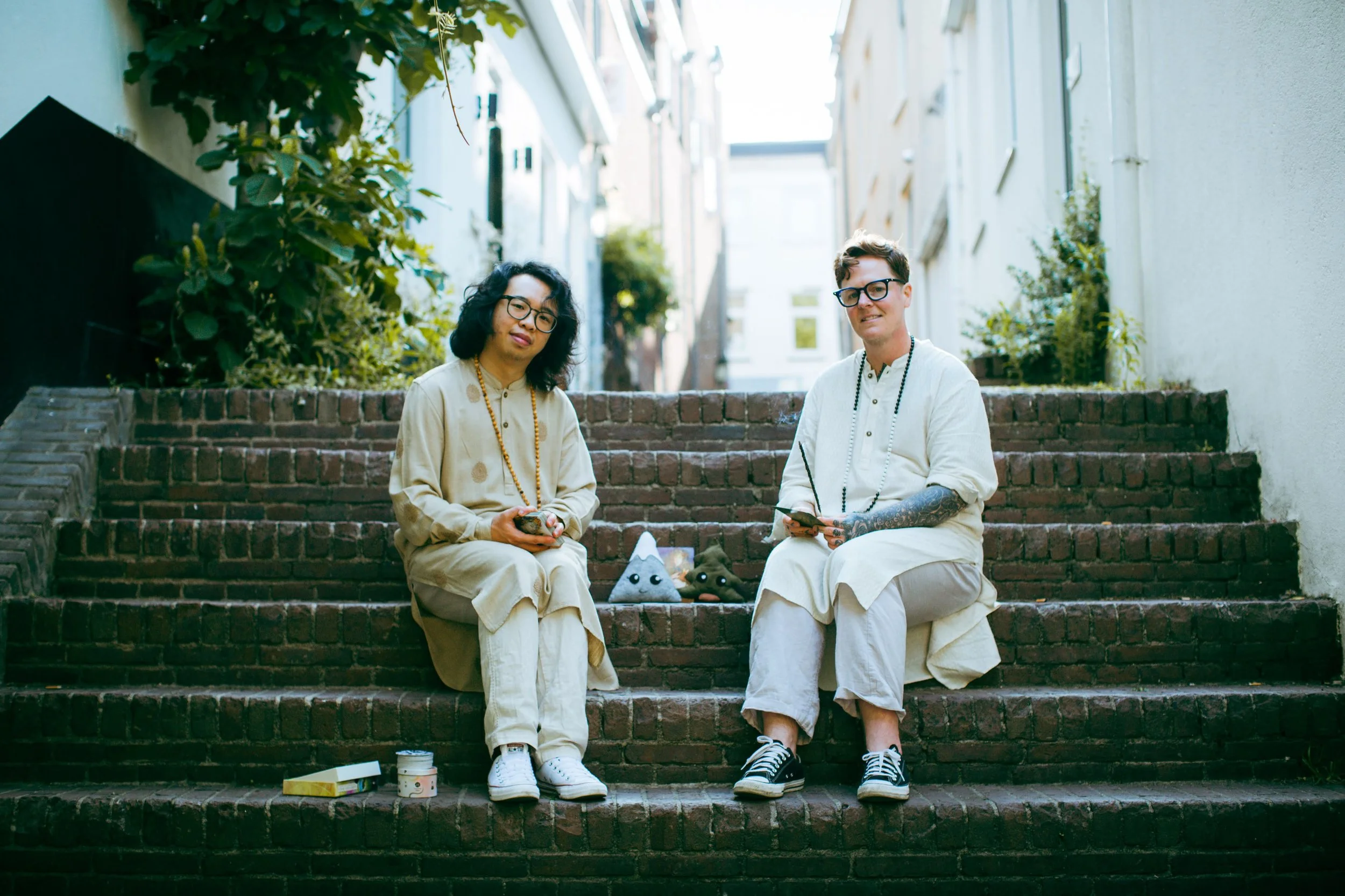
A meditative approach to relationship
Our sessions are deeply relational, experiential, and meditative in nature. We invite you to slow down together and become curious about what's unfolding in the present moment, including the subtle experiences that can be easy to miss when communicating through a screen.
Sometimes that means noticing what happens when one person shares something vulnerable, or when the other begins to feel disconnected. Other times, we may simply spend a few moments being quietly present together, noticing how it feels to share space and attention across distance.
With two practitioners, there's more room to attend to each person's experience and to the relationship itself. One of us might be accompanying a partner through something tender while the other notices a shift in connection, a subtle expression, or something happening in the space between you.
We may invite small experiments with listening, movement, sensory awareness, meditation, or creative ways of communicating. There's no requirement to meditate, be comfortable with silence, or approach your relationship in any particular way.
We bring a grounded presence and a spirit of curiosity, allowing the work to unfold through your direct experience and what feels meaningful to you.
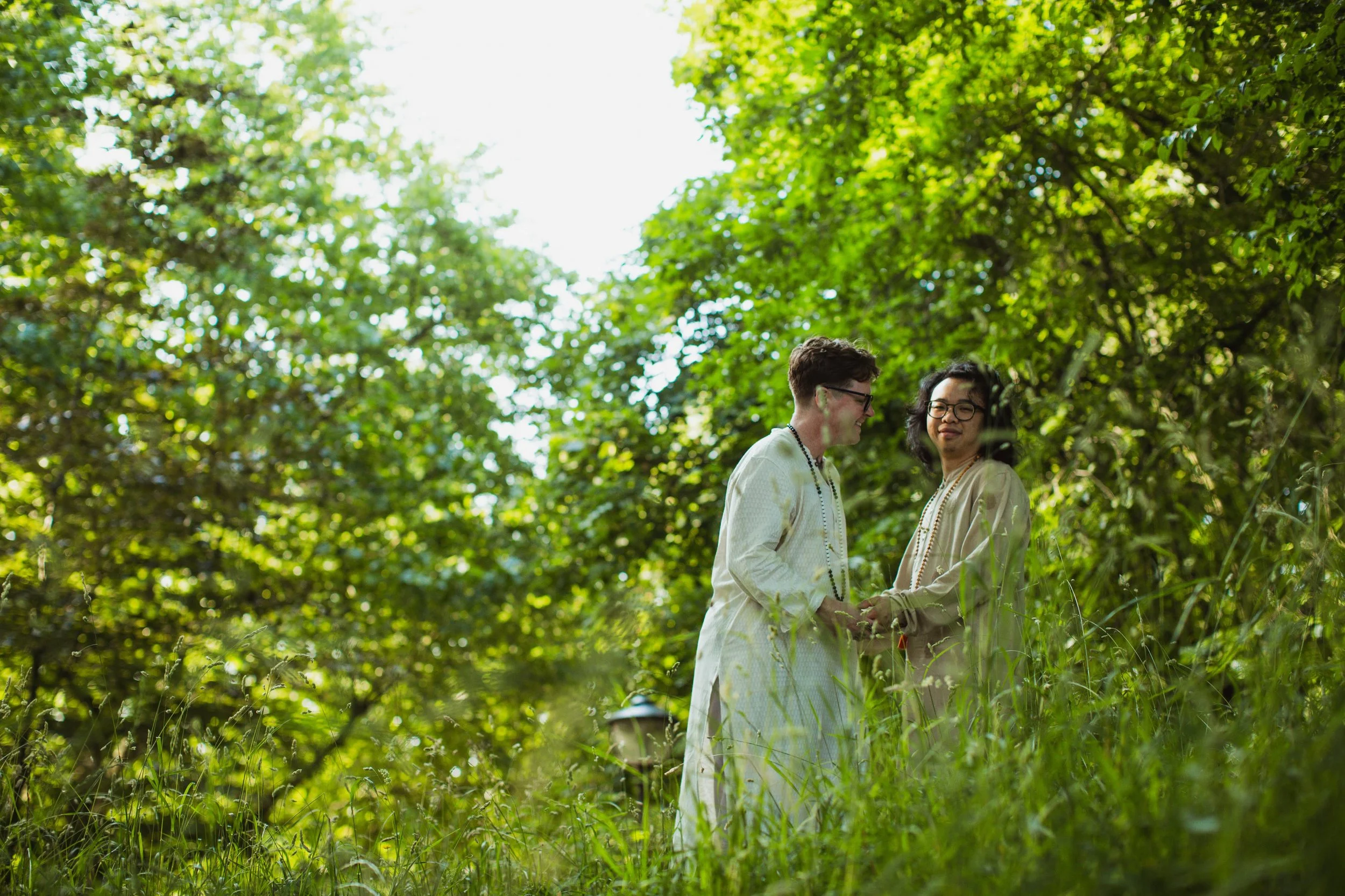
Working together and individually
One of the possibilities of our 2:2 approach is combining shared relationship sessions with individual sessions for each partner. For long-distance couples, this can be particularly helpful when your experiences of the relationship are quite different.
Perhaps one partner is finding the distance increasingly painful, while the other appreciates the independence it offers. Individual sessions can make room to explore those experiences more fully before bringing them into the shared relationship space. One of you might be struggling with loneliness, uncertainty, or questions about relocation, while the other is navigating competing responsibilities or finding it difficult to communicate their own needs.
We might also use individual sessions to explore how each person experiences online connection, including what helps them feel grounded, seen, and emotionally available. Kirien's Eco-Relational Presencing approach may be particularly helpful here, offering opportunities to explore your relationship with your own environment and how you share that experience with your partner.
My own approach brings somatic awareness, deep listening, and present-moment exploration, including the ways longing, conflict, uncertainty, or questions about the future are experienced in everyday life. These are possibilities rather than fixed roles. We'll explore together what feels supportive, taking into account each person's preferences, needs, and the different perspectives we bring.
We might alternate between sessions with all four of us and individual sessions with each practitioner, creating opportunities for both personal exploration and shared understanding. These individual sessions remain part of our relationship work. We'll establish clear agreements about confidentiality and information-sharing before beginning, so that everyone understands how the process works.
Our intention is to support the relationship you're creating, while making room for each person to feel seen, honored, and understood.
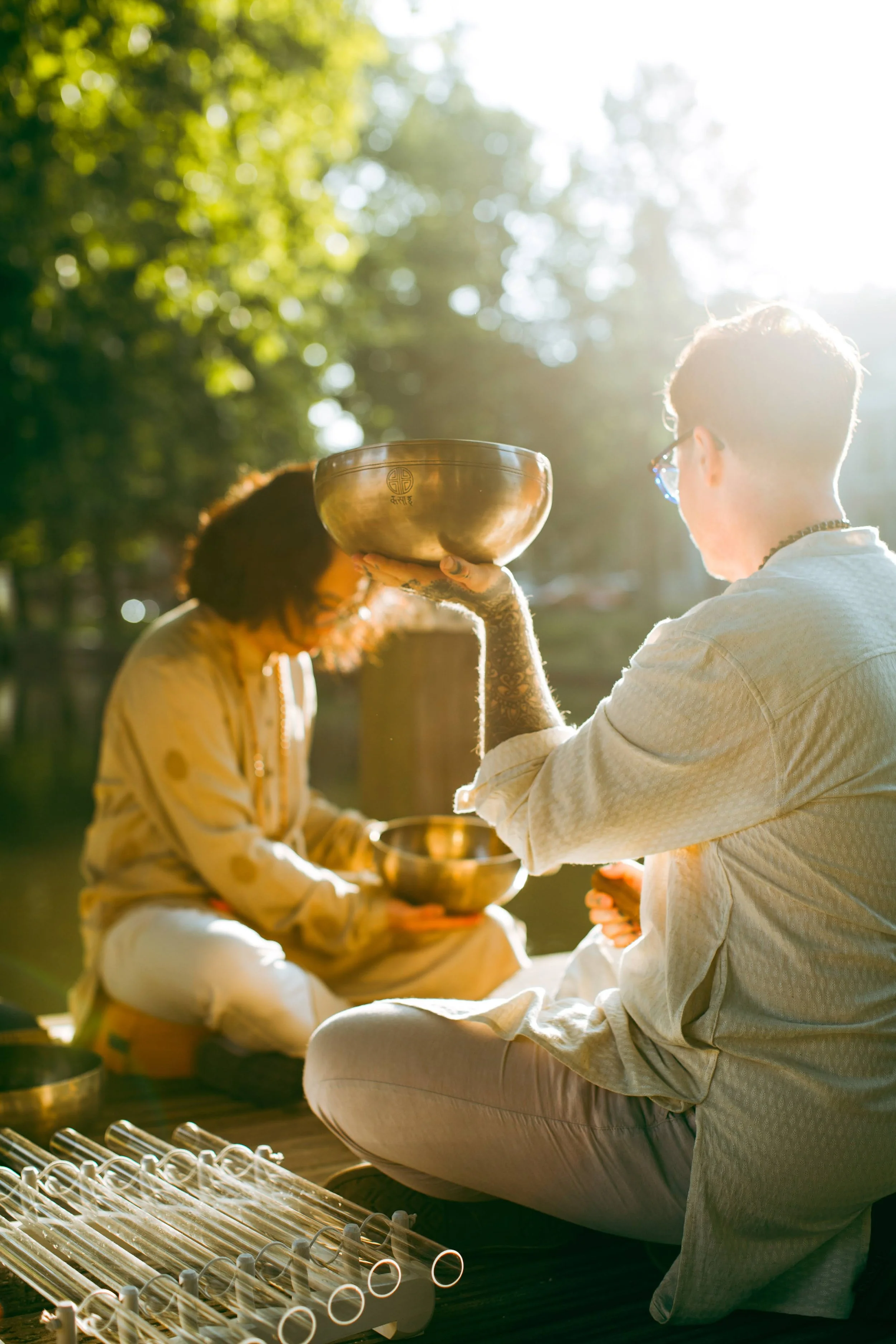
Meet Soren & Kirien
We're life partners and practitioners who bring different backgrounds, experiences, and ways of understanding relationships into our work together. Our own experiences of connection across distance have shaped our curiosity about what intimacy can look like when people aren't physically together. We're particularly interested in how slowing down, becoming more attentive, and experimenting with different forms of connection can open possibilities for relationships.
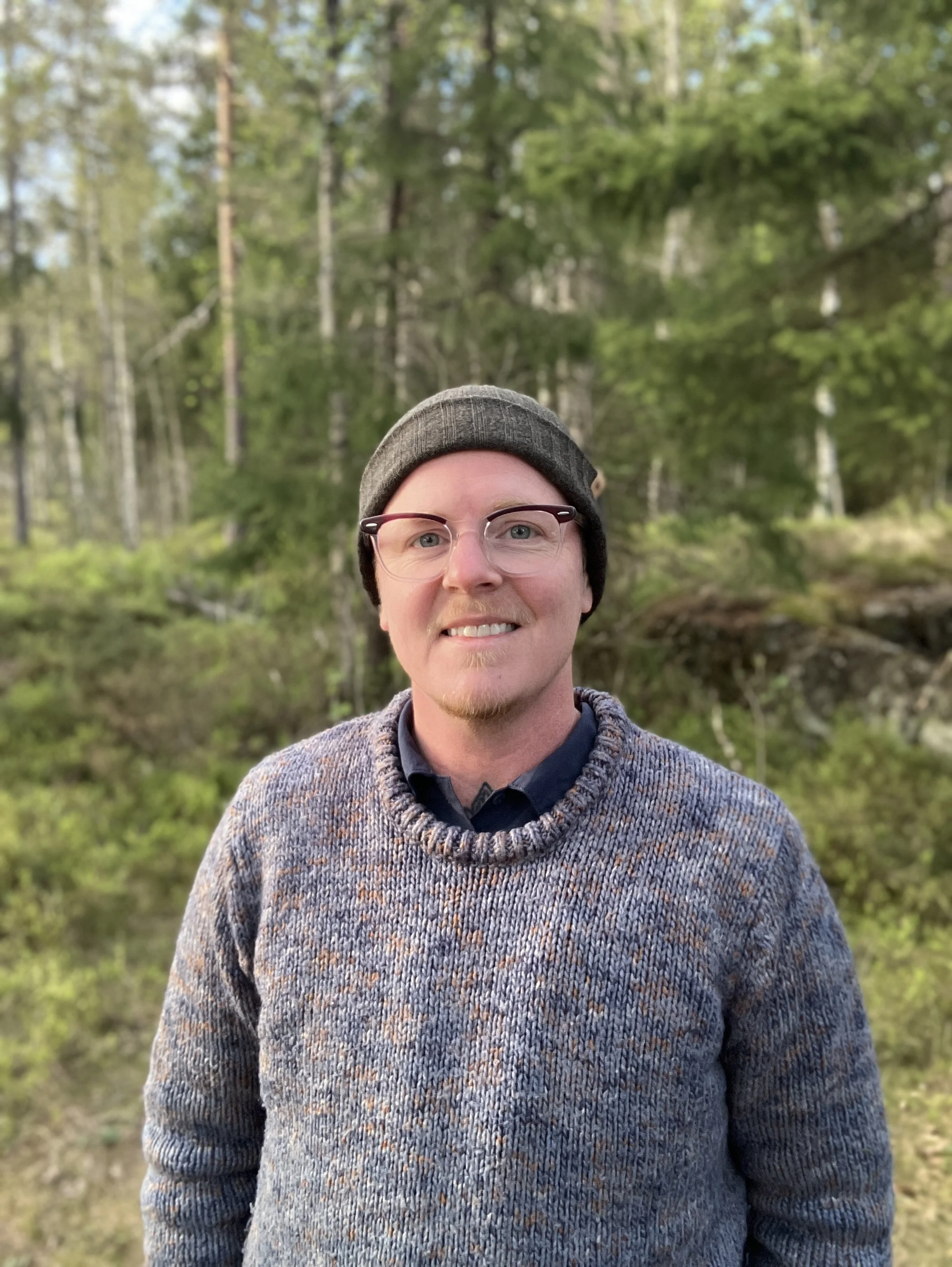
Soren Stone
I'm a US-trained counsellor with a master's degree in Clinical Mental Health Counseling and more than a decade of experience supporting individuals and relationships.
My approach is gentle, relational, and deeply meditative, drawing from somatic awareness, mindfulness, and experiential relationship practices.
Having lived across countries and navigated international relationships myself, I understand something of the challenges of maintaining connection across different places, circumstances, and stages of life.
I'm particularly interested in helping couples slow down, become curious about what happens between them, and discover more spacious ways of being together, especially when familiar patterns of communication leave them feeling disconnected.
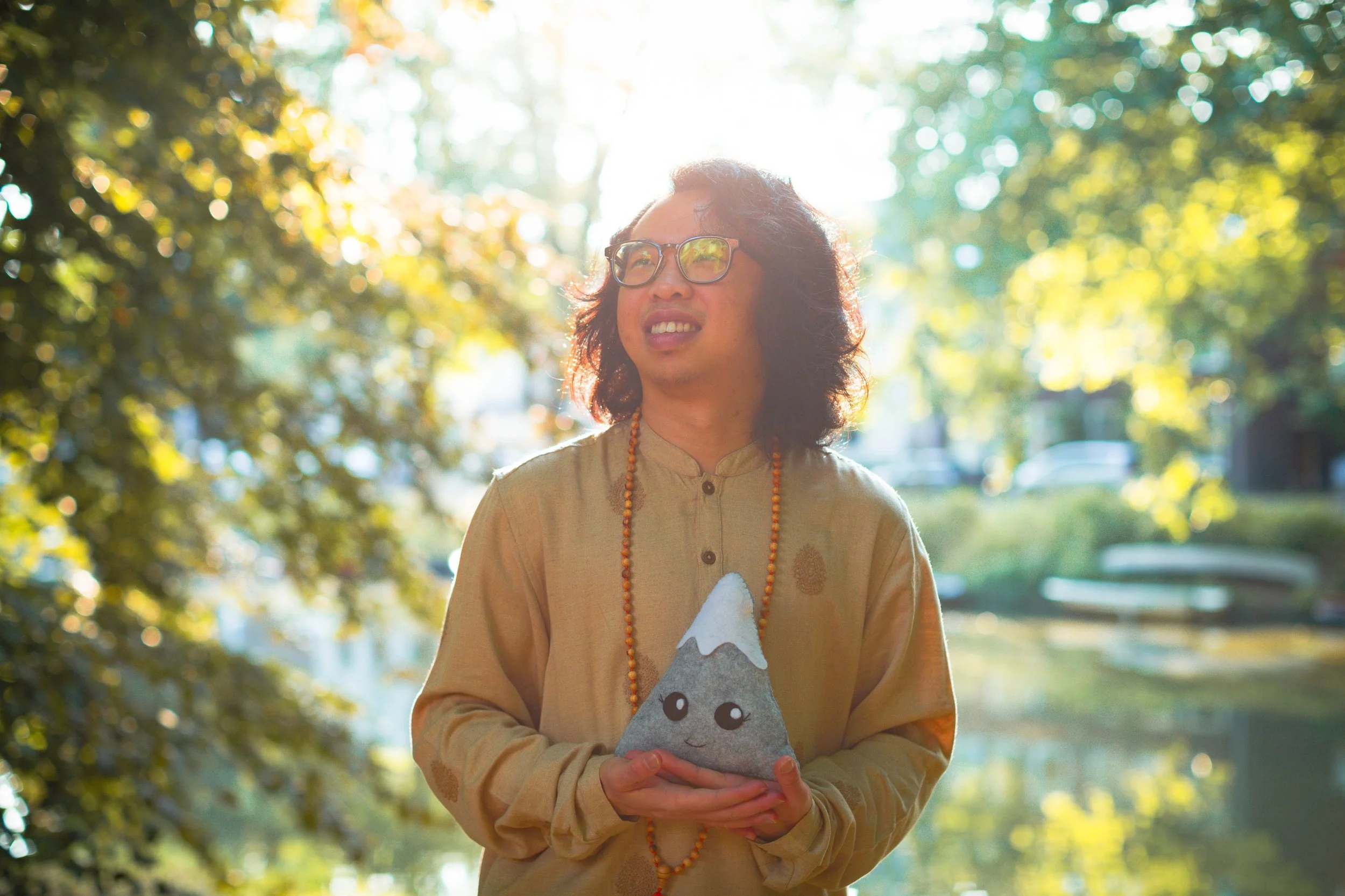
Kirien Eyma
Kirien is a somatic and relational practitioner whose work is grounded in lifelong meditation practice, Authentic Relating, forest therapy, and deep attention to the present moment.
Having lived in six countries and spent eight years working in the technology industry, Kirien brings a particularly interesting perspective on the relationship between human connection, technology, and the environments we inhabit.
Kirien developed Eco-Relational Presencing, a practice that brings together relational mindfulness, sensory awareness, and nature connection to explore deeper ways of being present with ourselves and others, including through online interactions.
Their approach is slow, spacious, and deeply curious, creating opportunities to explore what becomes possible when we attend to our direct experience of being together.
What we bring together
Our different approaches complement one another, creating more room to explore both the challenges and the possibilities of your relationship. We share a commitment to honoring each person's experience, remaining curious about what emerges between us, and exploring forms of connection that make room for the realities of our lives. We're especially interested in supporting couples who are open to trying something different, slowing down, and discovering their own ways of relating across distance.
Support between sessions
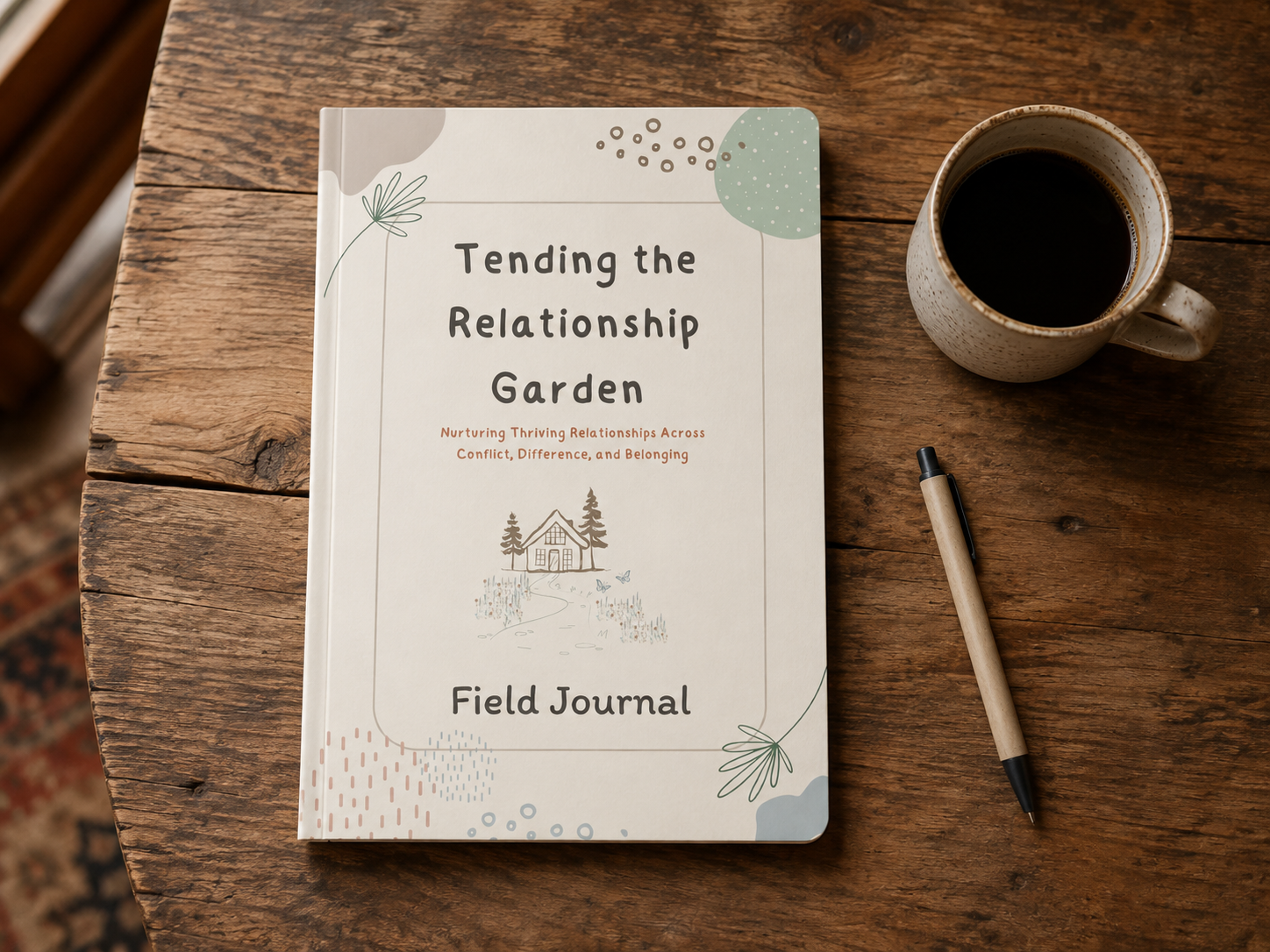
Clients in 2-on-2 Couples Counselling also receive access to Tending the Relationship Garden, my self-paced relationship course.
The course is not a programme that our sessions follow. Instead, it offers a collection of practices and reflections around communication, connection, conflict, boundaries, intimacy, and relationship patterns that you can return to when something feels useful.
From time to time, we may suggest a particular practice to experiment with between sessions, or you may explore the course in your own way and at your own pace.
Think of it as an additional resource alongside the relationship work, giving you more ways to keep tending what we are exploring together outside the session.
A dedicated space for your relationship…
We offer ongoing weekly 90-minute sessions with both of us, creating a consistent space to deepen your connection, explore challenges, and discover new ways of being together across distance.
Our sessions are experiential and meditative in nature, giving us time to slow down and practice the kinds of presence and intimacy you might want to bring into your everyday relationship.
When helpful, we can also incorporate individual sessions with each of us as part of our ongoing work together. Sessions are available online, with each partner welcome to join from a different location.
90 minutes | 2,500 NOK (€230)
Let's begin with an experience together…
Finding support for your relationship can feel like a big step, especially when you're already navigating the challenges of distance.
Our free introductory session is an opportunity to get to know one another and experience a little of how we work.
We'll make room for what brings you here, slow things down, and explore what happens when we bring our attention to your connection. There will also be time for questions and to see whether ongoing weekly sessions feel right for you.
You don't need to prepare anything or know exactly what you're looking for. We can begin wherever you are.
FAQ
-
2-on-2 Couples Counselling means that two practitioners work together with one couple or relationship constellation in the same session.
Our approach is experiential and present-focused. Rather than having two experts analyse your relationship, we use the additional presence to pay close attention to what happens between you in real time.
The work draws from relational mindfulness, Authentic Relating, Gestalt-informed practice, somatic awareness, and Soren's professional background in couples and relational counselling.
-
We don't believe every long-distance relationship needs to be working toward living together.
For some couples, sharing a home is an important goal. For others, living separately allows them to honor different needs, responsibilities, communities, or ways of being in relationship.
We also recognize that distance isn't always a choice, and that practical circumstances can make living together difficult or impossible.
We're interested in supporting you in creating a relationship that feels meaningful and sustainable within the realities of your lives, without assuming that there's one correct destination.
-
We believe there are possibilities for meaningful connection online that many of us haven't had the opportunity to explore.
Physical closeness offers experiences that technology can't reproduce, and it's understandable to miss those experiences when we're apart.
At the same time, online connection has its own qualities and possibilities. Through practices such as Eco-Relational Presencing, we can explore ways of sharing our sensory experiences, environments, attention, and emotional presence that may deepen our understanding of one another.
We're particularly interested in what happens when we approach online connection with curiosity and creativity, rather than assuming it will always be a lesser version of being together physically.
-
That's completely understandable.
Sometimes online communication begins to feel like another obligation, especially when we're trying to maintain closeness through conversations that can become repetitive or exhausting.
We can explore different ways of connecting, including quieter forms of presence, sharing ordinary moments, or finding creative alternatives to constant conversation.
We might also become curious about what each of you needs from online contact, and whether there are different rhythms or forms of communication that would feel more supportive.
There's no expectation that you spend more time online to prove your commitment to the relationship.
-
Conflict can become particularly difficult when we're communicating through technology, where tone, timing, facial expressions, and other subtle forms of communication can be harder to interpret.
We can explore these experiences together, including what happens when misunderstandings arise, how each of you responds, and what helps you remain connected during difficult conversations.
Our meditative approach also offers opportunities to experiment with slowing down, noticing what's happening in the present moment, and finding different ways of communicating when familiar patterns aren't working.
The intention is to discover what supports your particular relationship, rather than applying a set of communication rules.
-
This can be an especially tender and difficult situation.
There may be questions about careers, family responsibilities, finances, immigration, community, independence, or what each person understands commitment to mean.
One partner may experience the uncertainty as painful or frightening, while the other feels pressure to make changes they're not ready or able to make.
We can create space to explore these different experiences, including the fears, hopes, and expectations beneath them, without rushing toward a decision or assuming that one person's wishes should take priority.
-
Absolutely.
We welcome people in polyamorous, consensually non-monogamous, queer, living-apart-together, and other relationship structures, including those that don't fit neatly into established categories.
We're interested in the relationship you're creating and the meanings you give to intimacy, commitment, connection, and belonging.
If your relationship involves more than two people, we can discuss together how to adapt the format to make room for everyone involved.
-
Not at all.
Our approach is meditative in nature, but that doesn't mean you need to know how to meditate or have any particular spiritual beliefs.
We may offer simple invitations to slow down, notice your surroundings, or become curious about what you're experiencing in the present moment.
You can participate in whatever way feels comfortable, and you're always welcome to decline an invitation or suggest something different.
-
Yes. Our online format allows partners to join from separate locations, where we can provide services across the relevant jurisdictions.
We offer our shared 2:2 sessions in English, and Kirien can also offer individual sessions in Norwegian.
Our regular relationship sessions are 90 minutes, with the option of alternating shared sessions and individual sessions when that feels supportive.