

Intercultural & International Couples Counselling
Two practitioners, bringing different worlds together.
When we build a relationship across cultures, we bring more than ourselves into it. We bring our families, languages, histories, traditions, and often deeply held assumptions about how life and relationships are supposed to work.
Sometimes these differences are part of what draws us together. They invite curiosity, discovery, and possibilities we might never have imagined on our own.
Other times, they can leave us feeling deeply misunderstood, frustrated, or alone.
Perhaps you've found yourselves thinking:
"The way I do things makes perfect sense to me. Why doesn't it make sense to you?"
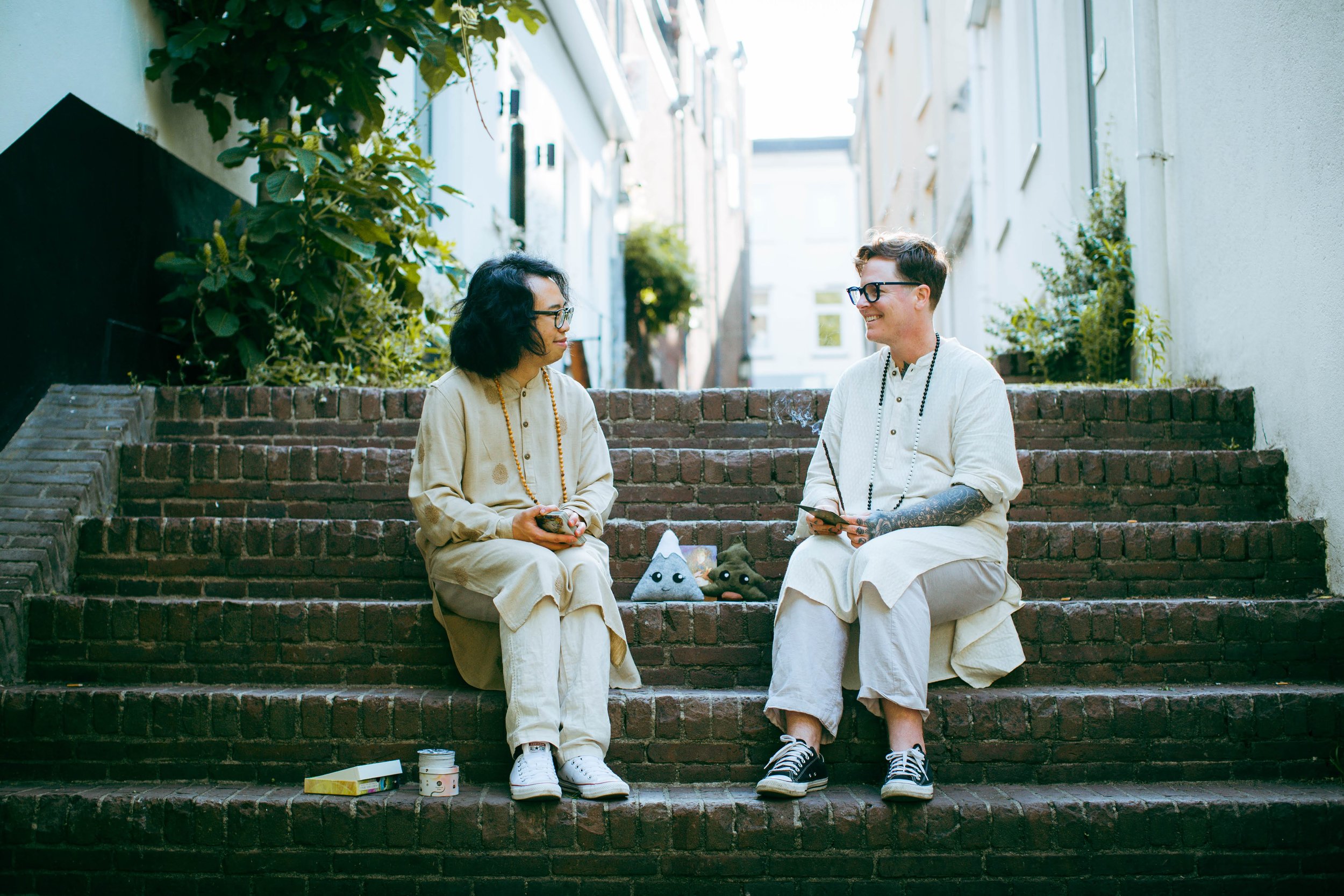
Alongside my life partner, Kirien, I offer 2:2 couples counselling in Oslo and online, where we can slow down, explore these differences with care, and become curious about the relationship you're creating together.
We bring our own lived experience of intercultural partnership, alongside our different professional backgrounds and ways of understanding the world.

When two worlds meet…
Cultural differences don't always announce themselves. Sometimes they appear in the smallest moments of everyday life.
One person may have grown up in a family where love was expressed through practical acts of care, while the other learned to express affection through words and physical closeness.
One might value direct, honest communication, while the other has learned that maintaining harmony means paying close attention to what remains unspoken.
Perhaps one of you sees financial independence as essential, while the other understands money as something shared across the wider family. One may feel deeply responsible for their parents, while the other struggles to understand why extended family has so much influence over decisions in your relationship.
These differences can become especially tender when navigating children, parenting expectations, family visits, gender roles, intimacy, conflict, or the everyday responsibilities of sharing a home.
Over time, it's easy to begin interpreting one another's behavior through our own familiar understanding of what is reasonable, caring, or respectful.
And yet, there may be important histories, values, and experiences beneath these differences that neither of you has had much opportunity to explore together.
We can make room for those stories, while also paying attention to what happens between you in the present moment.
You might be coming because…
You find yourselves misunderstanding one another, even when your intentions are loving.
Language differences make it difficult to express subtle feelings, needs, humor, or cultural meanings.
Your families or in-laws have different expectations about closeness, involvement, boundaries, or obligations.
You have different approaches to money, saving, spending, or supporting extended family.
You're navigating different values or expectations around raising children.
Differences in communication styles leave one of you feeling unheard, criticized, or misunderstood.
You're questioning traditional gender roles or wanting to create a relationship that doesn't follow either culture's expectations.
Moving countries has changed the balance of your relationship, particularly when one person has sacrificed more to make the move possible.
One of you feels at home where you're living, while the other feels isolated, unhappy, or longs to leave.
You're navigating differences in religion, spirituality, identity, sexuality, or family traditions.
You love what your differences bring to the relationship, but sometimes struggle with the tensions they create.
You want to become more curious about one another and the unique relationship you're building together.
You don't need to arrive with a clearly defined problem. Sometimes it's enough to recognize that your relationship could use more room for understanding, attention, and care.
When one person feels more at home than the other…
Building a life in another country can profoundly change the dynamics of a relationship. Sometimes one partner has moved to be with the other, leaving behind familiar surroundings, friendships, career opportunities, language, and community. This person is sometimes called the trailing spouse or trailing partner, although those terms hardly capture the complexity of what they may have left behind.
One of you might be flourishing in your new home while the other feels increasingly lonely, dependent, or disconnected from their sense of self. Perhaps one person has greater fluency in the local language, understands how institutions and social customs work, or has an established network of friends and family. The other may find themselves relying on their partner for everything from official paperwork to everyday social interactions.
Sometimes the partner who feels settled struggles to understand why the other isn't happy. And the partner who feels displaced may struggle to express their grief without feeling guilty, ungrateful, or resentful. There may be difficult questions about where to live, whose career takes priority, how long to stay, or what each person has given up for the relationship.
We understand something of these experiences from our own lives, and we know how complicated they can become. There is room to explore all of this without assuming that either partner's experience is more legitimate than the other's.

Discovering the strengths within our differences
There's something beautiful about the possibility of creating a relationship that doesn't need to follow any one cultural framework. When two people bring different histories, values, and ways of understanding life into a relationship, there may be opportunities to discover possibilities that neither would have encountered alone.
Perhaps one partner introduces a different understanding of family, community, or collective responsibility. Perhaps the other brings perspectives on independence, personal boundaries, or the freedom to question inherited expectations.
Sometimes these differences challenge us in ways that are deeply uncomfortable. They may also help us recognize assumptions we've carried for so long that we never thought to question them. Perhaps, over time, we discover that we're free to create something uniquely our own.
A relationship shaped by the cultures we come from, while also allowing us to question, adapt, and experiment with how we want to live together. We're particularly interested in supporting couples who are curious about this process, including those who want to build relationships outside conventional expectations around gender, family, intimacy, responsibility, and partnership.
There is no single right way to be a couple.
We bring our own lived experience
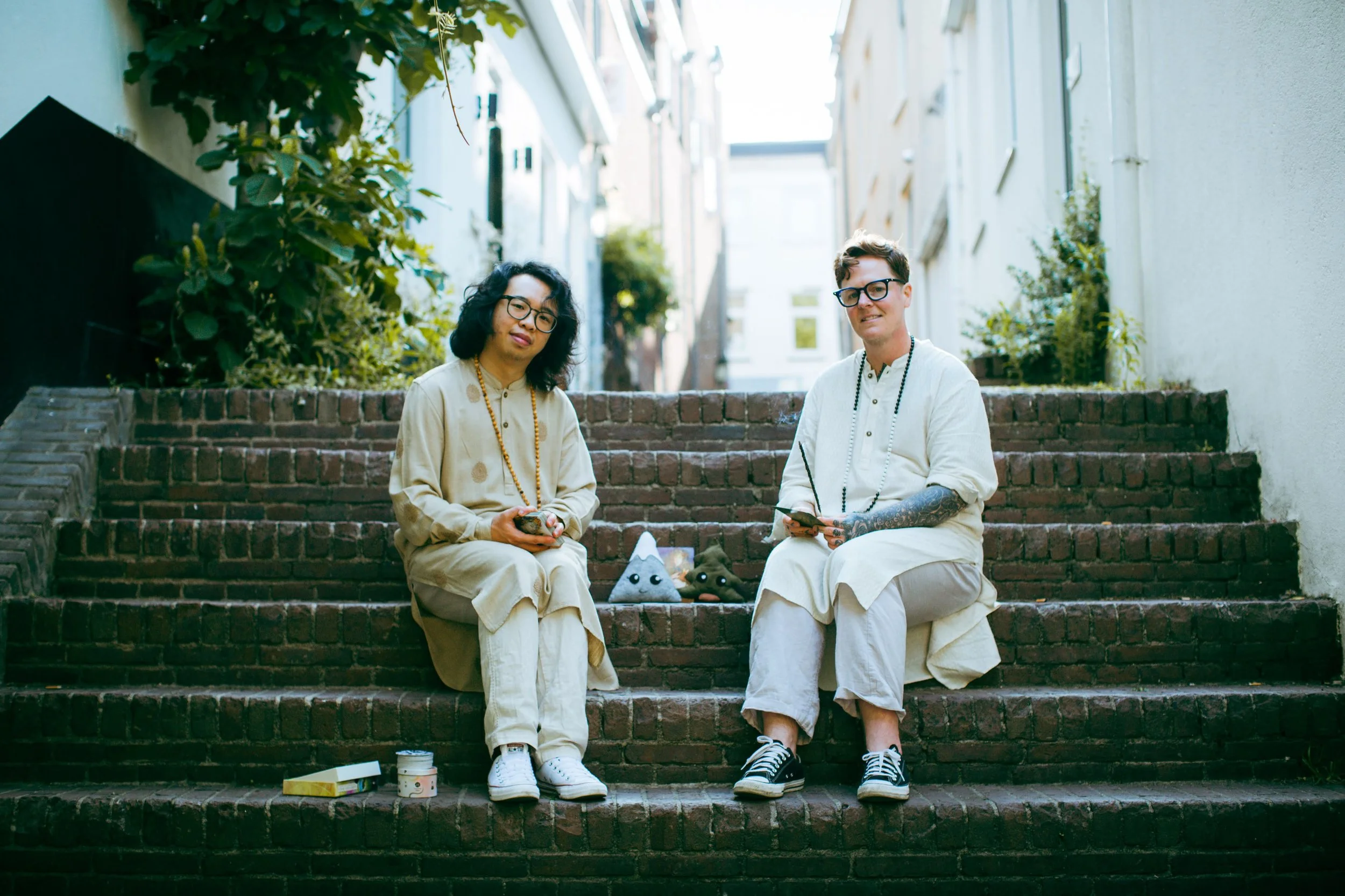
Kirien and I are an intercultural couple ourselves, and our relationship has been one of the most profound ongoing learning experiences of our lives. We come from different cultural backgrounds, have lived across countries, and carry different assumptions about communication, family, relationships, identity, and what it means to be a person in the world.
Sometimes these differences have opened wonderful possibilities for connection and understanding. Other times, they've led to misunderstandings, frustration, and the humbling realization that something which seems completely obvious to one of us may be experienced very differently by the other.
We've had to learn how to become curious about one another's worlds, including the parts that challenge our own understanding of how things should be.
Kirien has lived in six countries and brings a particularly rich experience of navigating cultural and linguistic differences. He speaks English and Norwegian and has spent years living in Norway, developing a familiarity with the language, culture, and everyday realities of life here.
My own background includes living and working across different countries, navigating migration and identity, and more than a decade of counselling experience supporting people through relationship challenges and significant life changes.
We also share a commitment to exploring how our relationships can become places of greater care, humility, and connection, extending into our communities and the larger living world.
We don't come to this work with a perfect relationship or a set of answers about how intercultural couples should live. We bring our experience, our ongoing curiosity, and our willingness to sit with the complexity of two people trying to build a life together.

A meditative approach to couples work
Our sessions are deeply relational and meditative in nature. Rather than spending all our time analyzing past conflicts or trying to determine who's right, we invite you to slow down and become curious about what's happening between you in the present moment.
Perhaps one of you is describing a disagreement about family expectations. As you speak, the other becomes quiet, looks away, or begins to explain themselves more urgently. We might invite you to pause together.
What is happening right now? What are you each experiencing? What assumptions or meanings are beginning to emerge?
These moments can help us notice how cultural histories, personal experiences, and familiar patterns are showing up in your relationship, often in ways that might otherwise go unnoticed.
With two practitioners present, there's more room to attend to the experiences of both partners, as well as the relationship itself. We may share observations, invite small experiments in communicating or listening, or simply make room for something difficult to be felt and understood.
We approach these moments with curiosity, respecting that each of you is the authority on your own lived experience.

Working together and individually
One of the possibilities of our 2:2 approach is combining shared relationship sessions with individual sessions for each partner. Sometimes it can be helpful to explore an experience individually before bringing it into the relationship space.
For example, one partner might be struggling with the grief of leaving behind a career, community, or familiar way of life. Individual sessions could offer more room to explore those experiences, especially when it's difficult to express them without worrying about hurting the other person. The other partner might be carrying the pressure of managing practical responsibilities, navigating family expectations, or feeling responsible for helping their partner settle into a new country.
There may also be cultural or linguistic experiences that deserve more individual attention. Kirien's Norwegian language skills and familiarity with life in Norway may be particularly helpful when exploring experiences involving Norwegian culture, family expectations, or the subtleties of communicating across languages. Individual sessions with Kirien can also take place in Norwegian, while our shared couples sessions are offered in English.
We might alternate between meeting all together and having each partner meet individually with one of us. The arrangement is flexible and guided by what feels supportive to your relationship. These individual sessions remain part of our shared relationship work. We're not here to create separate alliances or take sides, and we'll discuss how privacy, communication, and information-sharing work before beginning.
The intention is to make more room for each person's experience while continuing to care for the relationship you're creating together.
Meet Soren & Kirien
We're life partners and practitioners who bring different cultural backgrounds, life experiences, and ways of understanding relationships into our work together. Our own intercultural relationship continues to teach us about the beauty and complexity of meeting someone whose experience of the world can be profoundly different from our own. We bring that same curiosity, humility, and willingness to learn into the space we create with couples.
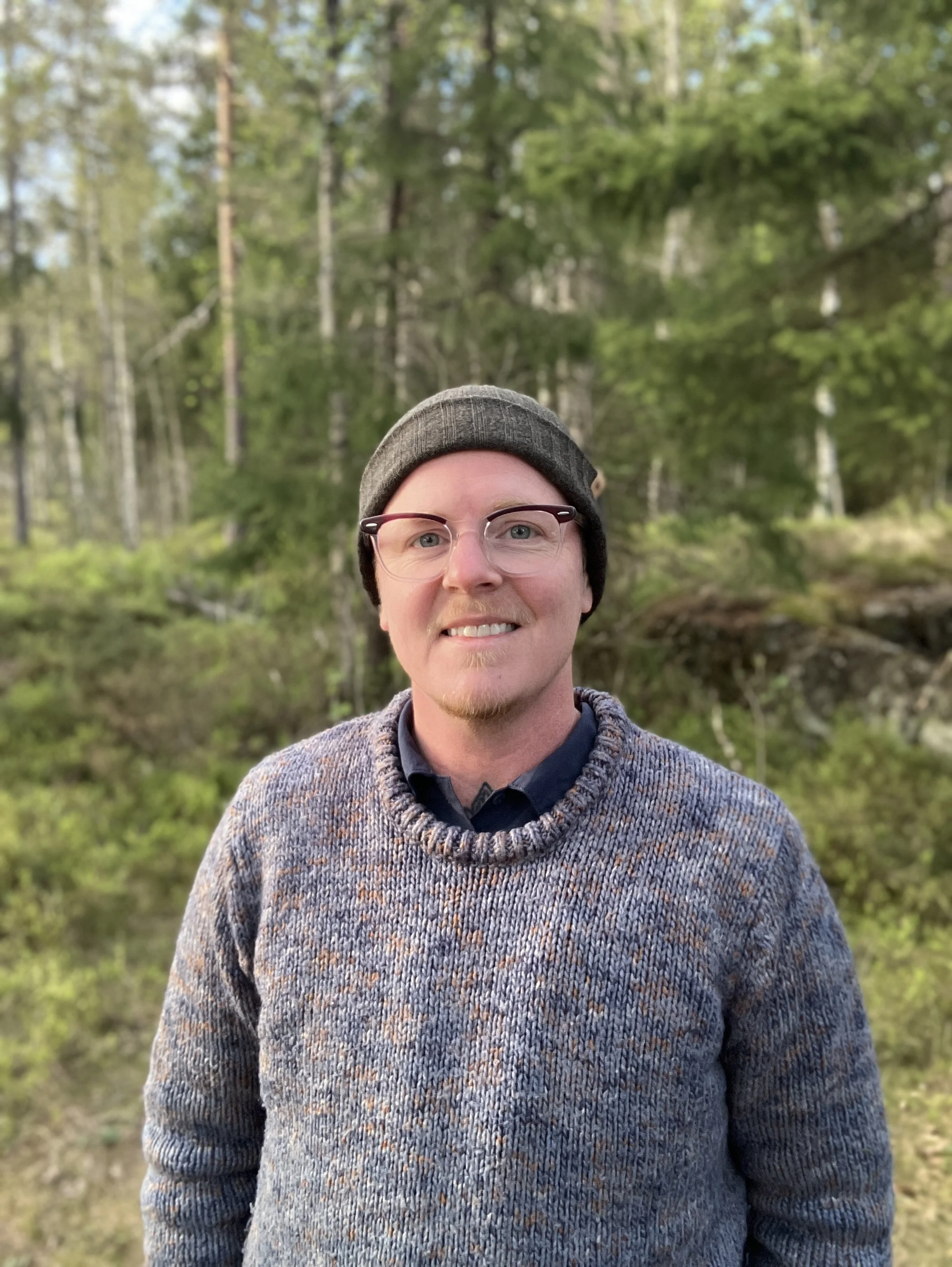
About Soren
I'm a counsellor and coach with more than a decade of experience supporting people through relationship challenges, identity, belonging, and significant life changes.
Originally from the United States, I've lived across countries and experienced firsthand how migration can change our relationship with ourselves, our communities, and the people closest to us. My own journey has also involved questioning and stepping outside many conventional expectations around gender, relationships, and how we're supposed to live.
I bring a gentle, meditative approach to our sessions, drawing from somatic awareness, mindfulness, and experiential relationship practices. I'm particularly interested in helping us slow down enough to notice what happens between us, including the assumptions and familiar ways of relating that we may never have thought to question.

Kirien Eyma
Kirien is a somatic and relational practitioner whose approach is deeply rooted in meditation, mindfulness, and a lifelong curiosity about human connection and suffering.
Having lived in six countries, with Mandarin as his first language and fluency in both English and Norwegian, he brings a rich understanding of what it means to navigate different cultural worlds. His experiences have shaped a particular sensitivity to language, belonging, cultural expectations, and the many ways we learn to understand ourselves through our relationships.
Kirien draws from Buddhist meditation, Gestalt, authentic relating, forest therapy, and other embodied and relational practices. He brings a quiet, grounded presence and a deep commitment to honoring each person's direct experience without rushing to interpret or change it.
What we bring together
Our different backgrounds and perspectives allow us to notice different things, ask different questions, and create more room for each person's experience. We don't always understand the world in the same way, and that's part of what makes our work together meaningful. We bring our curiosity, our ongoing learning, and a shared commitment to helping couples discover their own ways of living and relating, with greater understanding, connection, and care.
Support between sessions
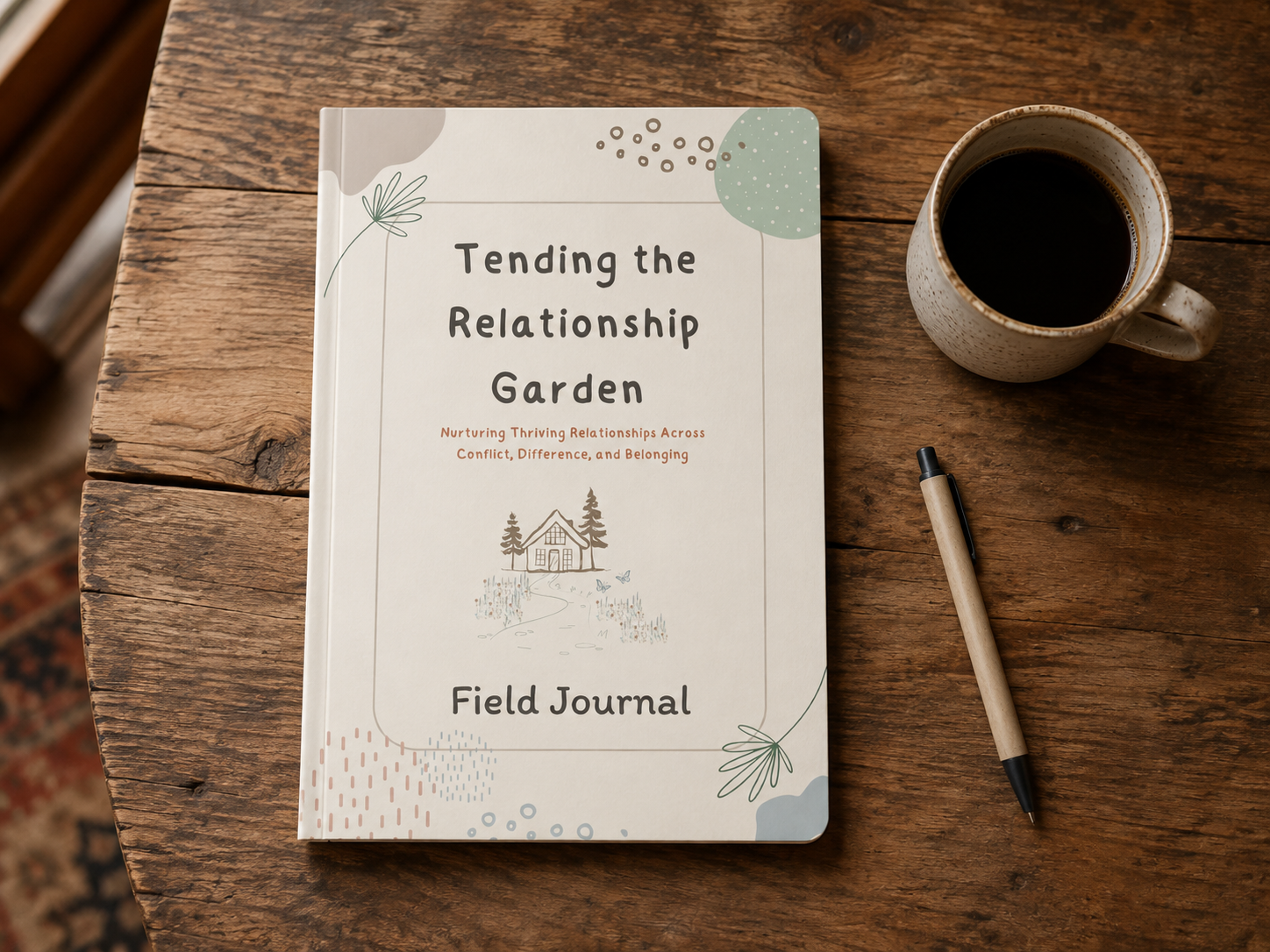
Clients in 2-on-2 Couples Counselling also receive access to Tending the Relationship Garden, my self-paced relationship course.
The course is not a programme that our sessions follow. Instead, it offers a collection of practices and reflections around communication, connection, conflict, boundaries, intimacy, and relationship patterns that you can return to when something feels useful.
From time to time, we may suggest a particular practice to experiment with between sessions, or you may explore the course in your own way and at your own pace.
Think of it as an additional resource alongside the relationship work, giving you more ways to keep tending what we are exploring together outside the session.
A dedicated space for your relationship…
We offer ongoing weekly 90-minute sessions with both of us, creating a consistent space to deepen your connection, explore challenges, and discover new ways of being together across distance.
Our sessions are experiential and meditative in nature, giving us time to slow down and practice the kinds of presence and intimacy you might want to bring into your everyday relationship.
When helpful, we can also incorporate individual sessions with each of us as part of our ongoing work together. Sessions are available online, with each partner welcome to join from a different location.
90 minutes | 2,500 NOK (€230)
Let's begin with an experience together…
Finding support for your relationship can feel like a big step, especially when you're already navigating the challenges of distance.
Our free introductory session is an opportunity to get to know one another and experience a little of how we work.
We'll make room for what brings you here, slow things down, and explore what happens when we bring our attention to your connection. There will also be time for questions and to see whether ongoing weekly sessions feel right for you.
You don't need to prepare anything or know exactly what you're looking for. We can begin wherever you are.
FAQ
-
2-on-2 Couples Counselling means that two practitioners work together with one couple or relationship constellation in the same session.
Our approach is experiential and present-focused. Rather than having two experts analyse your relationship, we use the additional presence to pay close attention to what happens between you in real time.
The work draws from relational mindfulness, Authentic Relating, Gestalt-informed practice, somatic awareness, and Soren's professional background in couples and relational counselling.
-
The biggest difference is the presence of two practitioners.
That gives the relationship a wider field of attention. Each of us may notice different aspects of an interaction, and one practitioner can sometimes continue holding space while the other is more actively engaged.
Our approach is also particularly experiential. We are interested not only in what happens in your relationship outside the session, but in what begins happening between you while all of us are together.
-
Sometimes we may offer observations, ideas, or practices. Advice is not the centre of the work.
We are more interested in helping you slow down enough to notice your own relationship clearly.
Our hope is not that you become more dependent on our interpretations, but that you become increasingly able to recognise what is happening between you and respond with greater awareness and choice.
-
No.
We do not pair ourselves with individual partners.
The relationship is the focus of the work, and both of us remain interested in understanding each person's experience as well as what happens between you.
There may be moments when one of us is particularly engaged with one partner, but neither practitioner serves as that person's advocate against the other.
-
That is welcome.
We do not expect four people in a room to experience the same moment identically.
If we notice something differently, we can be transparent about that. Multiple perspectives can sometimes help loosen the idea that there must be one correct interpretation of what happened.
-
Yes. The co-facilitated relationship sessions remain the centre of the work, but individual sessions can sometimes be woven in when something would benefit from more space.
This might mean one partner meeting individually with me, while another meets separately with Kirien, or adding occasional individual sessions alongside the shared work. One benefit of this format is that you do not have to spend an entire session explaining the relationship from the beginning. We already know the wider context and have been in the room with you together.
Individual sessions are not used to create sides or alliances within the relationship. When we come back together, both of us remain oriented toward the relationship as a whole.
We will also talk clearly in advance about privacy, confidentiality, and how information from individual sessions is handled within the shared work.
-
No.
We work with relationships rather than marital status.
Dating couples, married couples, long-term partners, queer relationships, polyamorous and non-monogamous relationships, intercultural couples, international couples, and couples in long-distance relationships are welcome.
-
Yes.
Intercultural and international relationships may involve differences around communication, family, affection, conflict, independence, responsibility, gender, sexuality, money, home, migration, belonging, and what partnership itself is supposed to mean.
Those differences can be explored without assuming that one cultural framework is the correct one.
Sessions are offered in English.
-
Yes.
Online couples counselling can work particularly well for long-distance couples because each partner can join from their own location.
The relationship itself may also be navigating distance, visits, time zones, communication rhythms, intimacy, migration decisions, uncertainty, or plans for eventually living in the same place. Those experiences can become part of the work.
-
Yes.
LGBTQIA+, queer, trans and gender-diverse relationships are welcome, as are polyamorous, open, and consensually non-monogamous relationships.
We begin with the relationship you actually have rather than assuming that it should follow a conventional model.
-
You do not need to arrive knowing whether you want to stay together.
We can make space for uncertainty.
Sometimes relationship work supports people in finding a different way forward together. Sometimes it helps people understand that a relationship needs to change or end. Our intention is not to push toward either outcome.
-
Soren holds a master's degree in Clinical Mental Health Counseling and is licensed as a mental health counsellor in Washington State in the United States.
In Norway and internationally outside the United States, this work is offered as non-clinical counselling, coaching, relational support, and experiential practice outside the Norwegian authorised healthcare system.
Kirien participates as a relational and mindfulness practitioner and facilitator.
We do not provide emergency, crisis, diagnostic, or medical mental health services through this offering.
-
Yes.
There is no requirement to commit to a long programme simply to experience the Co-Facilitated Relationship Counselling format.
Begin with the free consultation. We can talk about what you are looking for and decide together what kind of rhythm or format might make sense.