Couples & Relationship Counselling in English
A space to tend what is happening between you
Relationships are living systems. They carry histories, hopes, habits, tenderness, protective patterns, cultural stories, different ways of giving and receiving care, and all the ordinary pressures of being human together.
Sometimes a relationship reaches a place that asks for more attention. You may be finding yourselves caught in familiar conversations, feeling farther apart than you want to be, moving through a major change, or simply sensing that something important between you wants to be understood more deeply.
I offer couples and relationship counselling in English, online throughout Norway and in person in Oslo, for people who want a thoughtful, collaborative space to understand what is happening between them and explore what might help the relationship grow.
Sessions in English · Online throughout Norway and internationally · In person in Oslo
75-minute sessions · 1 800 NOK ( or €165 )· Sessions in English
A space to explore what you are creating together…
Relationship counselling can be a place to become curious about the relationship itself.
We might begin with questions like:
What matters most to each of you?
What are you trying to create together?
Where does connection come easily?
Where do you lose sight of one another?
What helps each person feel cared for, free, understood, and able to belong?
What is asking for your attention now?
People seek couples counselling for many different reasons. Sometimes there is something painful that has been asking for attention or life has changed and the relationship is changing with it. Sometimes there is a wish to understand one another more fully and tend the relationship with greater care.
Living outside Norway? Online sessions are available internationally.
[Learn more about international online counselling →]
You might be experiencing...
recurring conflict or finding yourselves in the same conversations again and again
communication that becomes tangled, tense, or difficult to repair
feeling distant, lonely, or less connected than you once did
differences in how each of you approaches closeness, independence, or time together
one person reaching for more connection while the other needs more space
differences in sex, intimacy, affection, or desire
burnout, stress, illness, or caregiving affecting the relationship
changes in work, family life, parenting, or other responsibilities
rebuilding trust after hurt, rupture, secrecy, or betrayal
jealousy, insecurity, or fear of losing one another
different approaches to money, household responsibilities, or decision-making
cultural differences, family expectations, or different ideas about partnership
migration, relocation, or building a shared life somewhere new
neurodivergence or differences in communication, processing, sensory needs, or emotional expression
changes in gender, sexuality, identity, or how one of you understands yourselves
opening, closing, or changing the structure of a relationship
questions around polyamory, consensual non-monogamy, or kink
a major transition that is asking the relationship to grow in a new direction
wanting to deepen an already loving relationship and understand one another more fully
Every relationship has seasons when something asks for more care. Couples counselling can offer a place to slow down, listen more closely to what is happening, and explore together what the relationship may be asking for now.
Understanding the pattern between you
Many relationship struggles carry more than one layer.
A conversation about chores may also carry questions about care, fairness, recognition, or whether someone feels alone.
A need for space may be connected to overwhelm, autonomy, or the wish to return to connection with more capacity.
A longing for closeness may carry tenderness, fear, desire, or a wish to feel chosen.
Over time, each person’s way of protecting themselves or the relationship can begin interacting with the other person’s protections, creating a pattern that takes on a life of its own.
In our work together, we can slow that pattern down.
We can become curious about what each person is reaching for, what becomes tender, what happens in the body, and what possibilities begin to appear when there is more room to hear one another.
Making room for different experiences
Relationships hold a great deal at once: love, frustration, tenderness, grief, anger, fear, longing, uncertainty, joy, and all the complexity that comes with two whole people trying to build a life together.
Two people can move through the same moment and carry away very different experiences of what happened. Our histories, cultures, bodies, stories, identities, attachment experiences, and ways of making meaning all shape what we notice, what matters to us, and how something lands.
In our work together, there is room for all of those experiences and emotions to be present.
Conflict can offer important information. It can show us where something matters deeply, where a need is asking to be understood, where an old protection has been activated, or where the relationship may need different conditions in order to support both people more fully.
We can become curious together about what is happening underneath the conflict: What is each person reaching for? What support is needed here? What conditions might make it easier for both people to feel heard, cared for, and able to stay connected?
As each person’s experience becomes more visible, the focus can shift toward understanding the larger pattern and discovering what might help the relationship hold both people with greater care.
When conflict is tended with curiosity and enough space, it can become a pathway toward deeper shared understanding, greater intimacy, and new ways of meeting one another.
Exploring relationships as ecosystems
Every relationship grows within a particular landscape. Each person brings histories, cultures, identities, experiences of care and belonging, values, desires, hopes, and relationship maps gathered across a lifetime.
Around the relationship are families, friendships, communities, work, money, health, caregiving, culture, place, migration, social expectations, and the larger conditions of everyday life. All of these become part of the ecosystem the relationship is growing within. In our work, we may become curious about questions such as:
What helps connection flow between you?
Where do you become tangled?
How does each person recognize, offer, and receive care?
What happens when your different experiences of the same moment meet?
Where does each of you feel most at home in the relationship?
What helps you feel free enough to be fully yourselves while remaining connected?
Where is the relationship well supported by the world around it?
Where are the two of you carrying more than feels sustainable?
What helps you find one another again after something becomes difficult?
What values are you trying to live together?
What kind of relationship are you hoping to keep creating?
Relationship counselling can make room for the whole landscape, including what happens between you and the wider world your relationship belongs to.
What our work might look like
My approach is relational, collaborative, and somatically informed.
Together, we may explore communication, boundaries, agreements, repair, intimacy, trust, recurring conflict, and the rhythms of closeness and independence within the relationship.
We may slow particular moments down and notice what happens as tension arises: what changes in the body, what emotions appear, what story becomes louder, what someone reaches toward, and where someone begins to pull away.
Sometimes our conversations move into deeper territory around attachment, grief, shame, belonging, identity, sexuality, desire, autonomy, culture, or the relational maps each person has carried into the relationship.
Practical changes and deeper understanding can grow alongside one another.
For people seeking online couples counselling in Norway, this work can happen from wherever you are. I also offer in-person couples counselling in Oslo.
Finding your own way forward
Relationship counselling can offer room to listen more closely to what each person wants, needs, values, and hopes for, while also paying attention to what the relationship itself seems to need at this point in its life.
My approach is adaptive and collaborative. I want to get to know each of you as individuals, including the ways you experience connection, conflict, closeness, space, care, communication, and change. I also want to understand the particular relationship you have created together: its rhythms, strengths, sensitivities, histories, and the conditions that help it feel more supported.
The work can then be shaped around what is most useful for you. Sometimes that may mean slowing down a recurring pattern. Sometimes it may mean building new ways of communicating, making more room for emotion, tending trust, exploring intimacy, renegotiating expectations, or finding practical ways to support one another differently.
You remain the people who know your relationship from the inside. My role is to help create enough space, curiosity, and structure for each person’s experience to become clearer, and for the relationship to show us what may be asking for attention.
Together, we can explore what you want to nurture, what support may be needed, what conditions might help each of you flourish, and what kind of relationship you want to keep creating.
Relationships come in many forms
I welcome people across a wide range of identities, cultures, relationship structures, and life experiences.
My work includes heterosexual couples, LGBTQIA+, queer, trans, and gender-diverse partners, intercultural and interracial relationships, international couples, neurodivergent relationships, monogamous relationships, polyamorous and non-monogamous relationships, kink/BDSM relationships, and relationships navigating illness, disability, caregiving, migration, or major transitions.
I work with many international and intercultural couples building lives together in Norway. Intercultural couples counselling may include exploring different cultural backgrounds, family expectations, languages, migration experiences, ideas about partnership, or different senses of home and belonging.
I also offer LGBTQ+ relationship counselling with space for sexuality, gender, community, identity, and relationship structure to be part of the wider landscape of the work.
You can come with one partner, multiple partners, or on your own to explore relationship questions.
Your relationship can arrive with all of its complexity.
About me
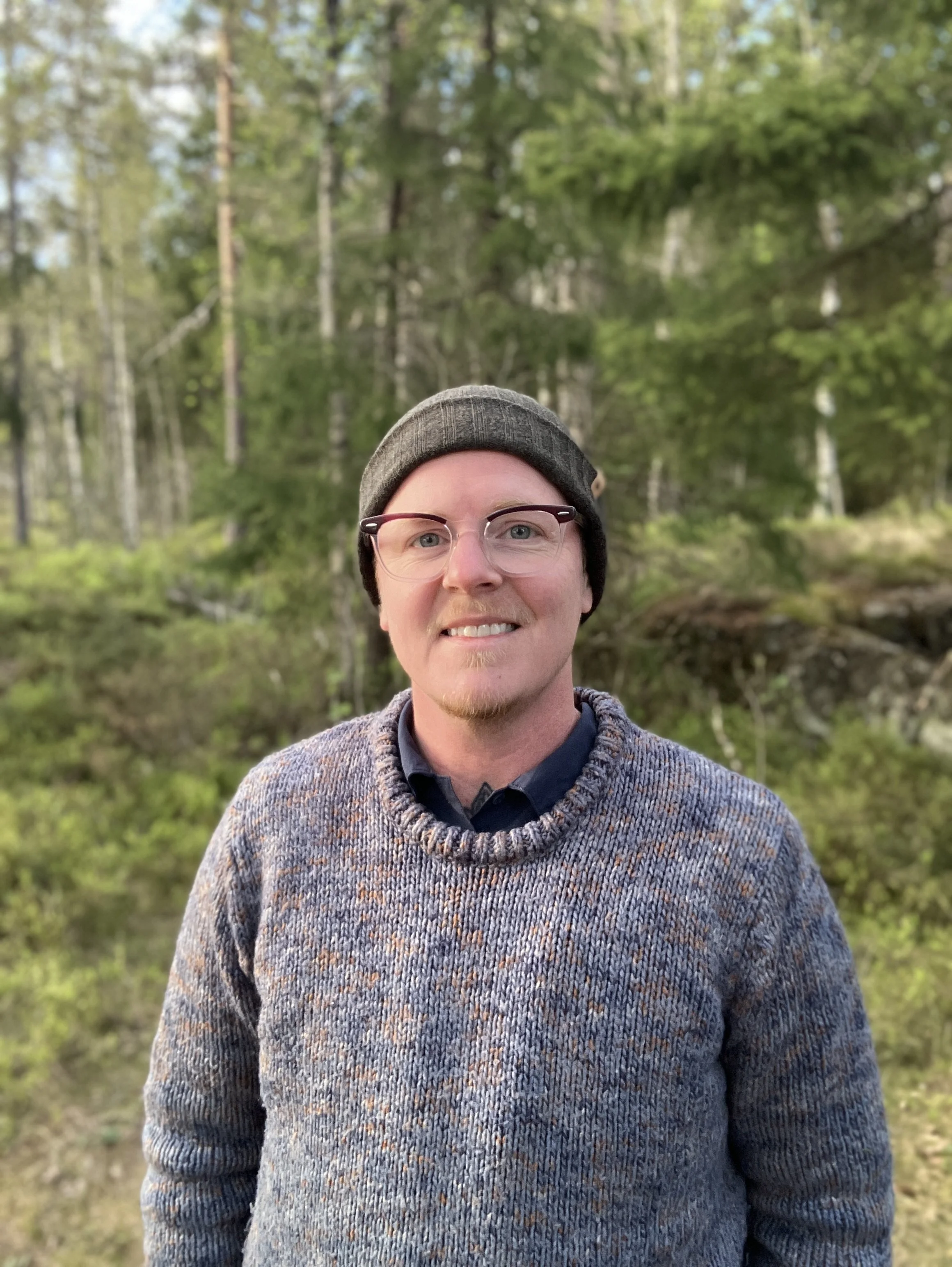
I’m Soren Stone, a US-trained counsellor with more than ten years of professional experience working with individuals, couples, and relationships.
My background includes extensive work with LGBTQIA+ communities, polyamory and consensual non-monogamy, intercultural relationships, neurodivergence, trauma, attachment, burnout, migration, and major life transitions.
My approach has been shaped by training in somatic, mindfulness-based, attachment-informed, and experiential approaches, including Sensorimotor Psychotherapy, Internal Family Systems, Acceptance & Commitment Therapy (ACT), and relational work.
I bring those frameworks lightly, alongside a deep respect for the wisdom people already carry about their own lives and relationships.
As an English-speaking counsellor in Norway, I work with people locally in Oslo and online throughout the country and internationally.
A note about counselling in Norway
I am a US-trained counsellor with more than ten years of professional experience. I hold a master’s degree in Clinical Mental Health Counseling and am a licensed mental health counsellor in Washington State.
In Norway, and internationally outside the US, I offer my work as non-clinical counselling and coaching. Sessions are designed for people seeking reflective, relational, and practical support and take place outside the Norwegian authorised healthcare system. I do not provide crisis, emergency, or diagnostic services.
FAQ
-
Yes. I offer online couples and relationship counselling throughout Norway, so you can work with me from Bergen, Stavanger, Trondheim, Tromsø, smaller communities, or wherever you happen to be based. I also offer in-person sessions in Oslo.
-
No problem—I offer relationship counselling online, so partners can join the same session from different locations or countries.
Long-distance relationships can also bring their own questions around connection, communication, time zones, visits, intimacy, uncertainty, future plans, migration, and creating a shared sense of home while living apart. We can make space for those experiences and shape the work around what your relationship needs at this point.
-
Yes. Couples in Oslo can meet with me in person, online, or use a mix of both depending on what works best for your schedules and circumstances. Couples elsewhere in Norway can meet with me online. I also work with couples in long distance relationships and/or couples who may live separately.
-
Recurring conflict often carries more information than the surface topic alone. We can slow the pattern down together and become curious about what each person is protecting, longing for, or trying to communicate, and what support or conditions might help the conversation unfold differently.
-
That is a very common relationship pattern. We can explore what closeness and space mean to each of you, what gets activated when those needs collide, and how the relationship might make more room for both connection and autonomy.
-
That is welcome here. I work with LGBTQIA+, polyamorous, consensually non-monogamous, kink/BDSM, intercultural, neurodivergent, and other relationships that may not fit conventional expectations. We can begin with the relationship you actually have and what matters within it.
-
You are welcome to come even if you are unsure whether you want to stay together.
Sometimes relationship counselling is a place to explore whether and how a relationship can continue. Sometimes it is a place to understand what has changed, what each person needs, and what possibilities are available from here.
We can make room for uncertainty without rushing toward a decision. The work can help each person speak more honestly, understand the relationship more clearly, and consider what kind of path feels most aligned with their values and needs.
If separation or divorce becomes the direction you choose, counselling can also support a more thoughtful transition, including communication, grief, boundaries, care, and whatever shared responsibilities or connections remain.
-
That’s completely welcome. All of my sessions are offered in English, and I work with many international and intercultural couples who use English as a shared language, even when it is not either person’s first language.
-
That uncertainty can be an important place to begin.
You do not need to arrive with a shared decision already made. We can slow things down, explore what each person is experiencing, understand what is keeping you connected, what is painful or unsustainable, and what each of you would need in order to move forward with greater clarity.
The aim is to create enough space for an honest decision to emerge, rather than forcing the relationship toward staying together or separating.
-
I have a wide range of personal and professional experience working with a vast array of different intersecting cultural identities and expressions. I have worked with people of all different racial and ethnic backgrounds, religions, ages/generations, socioeconomic statuses, disabilities, neurotypes, sexualities, gender identities, relationship orientations, national origins, and political views. I’m someone who is comfortable holding lots of space for nuance, complexity, and polarity. Everything and everyone is welcome. Nothing is too taboo or off limits and you will not be pathologized.
I have extensive experience working with the following communities/cultural contexts:
-LGBTQIA+
-Polyamorous, non-monogamous, open relationships
-Kink and BDSM, highly taboo and stigmatized sexual identities/desires
-Sex workers
-Neurodivergence
-Chronic illness and disability
-1st and 2nd gen immigrants, third culture kids, expats, internationals
-Multiple intersecting marginalized identities
-
You do not need to wait for a relationship to be in crisis. Counselling can be useful when there is distance, uncertainty, a recurring pattern, a major transition, or simply a wish to understand one another more deeply and tend the relationship with more intention.
-
My role is to understand the relationship and each person’s experience as fully as possible.
I am interested in what is happening between you, what each person is carrying, what each of you needs, and what conditions might help the relationship feel more supported. That means making room for different perspectives, even when they are in tension with one another.
I may sometimes slow something down, name a pattern, or invite one person to consider how something is landing for the other. The intention is to support greater understanding and choice for everyone involved.
My work is at its core relational, and I encourage ongoing feedback and sharing about how all partners are feeling throughout the process. If something isn’t feeling right, you are encouaged to speak up and we work through it together so everyone feels respected and supported. -
It can be hard to try again after a previous experience felt disappointing, especially if one or both of you felt misunderstood, blamed, or as though the counsellor had taken sides.
You are welcome to bring that experience into our work. It can help me understand what did and did not feel supportive before, and what you each need in order to feel more comfortable this time.
I adapt my approach to the people and relationship in front of me. Part of the work is getting to know how each of you experiences conflict, connection, care, communication, and support, and shaping the process around what feels useful for your relationship now.
Ready to explore what is happening between you?
You can begin with a conversation.
Free 30-minute consultation
The consultation is a no-obligation space for us to meet and get a sense of one another. You can share a little about what is bringing you to seek support at this point in your relationship, hear about how I work, and ask any questions that would help you decide whether this feels like a good fit.
If you are looking for couples counselling in Oslo or online relationship counselling anywhere in Norway, you are welcome to begin here.
75-minute sessions · 1 800 NOK ( or €165 )
Sessions in English
Online throughout Norway and internationally + in person in Oslo